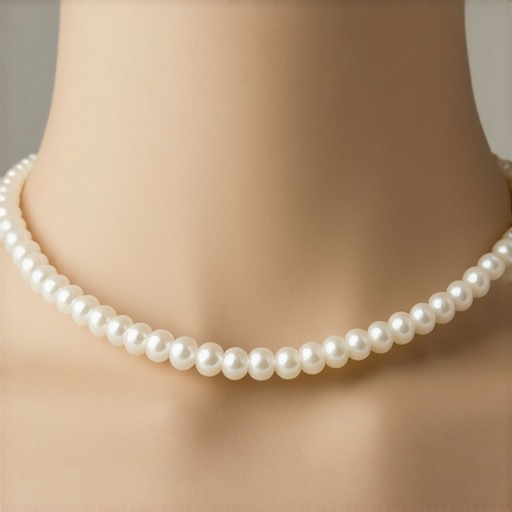
It was a quiet Saturday morning when I picked up my cherished pearl necklace, only to feel the unmistakable loose slide, a sensation I hadn’t noticed before. My heart skipped a beat—I suddenly realized my beloved piece was closer to ruin than I thought. That lightbulb moment made me question everything I thought I knew about jewelry care and the importance of timely restringing.
Why Your Pearl Silk Might Be Failing You Right Now
Over the years, I learned that pearls aren’t just beautiful—they’re delicate creations that demand care. One day, I noticed tiny knots starting to slip apart, and that’s when I realized my necklace’s silk thread was rotting away. If you own pearl jewelry, you’ve likely faced similar worries. Why do silk threads decay, and how can you tell if your necklace is on its last leg? Understanding the signs can save you from costly repairs or lost treasures. Recent studies show that silk, even when treated, can degrade within a decade, especially if exposed to moisture or chemicals—making regular checks essential, according to this expert source.
Will Ignoring These Signs Lead to Disaster?
One mistake I made early on was dismissing subtle signs, like slight looseness or fraying, thinking they were harmless. But neglect can lead to your pearls slipping out or even breaking apart, which is heartbreaking. If you’ve ever experienced that uneasy feeling when a piece of jewelry feels less sturdy, you’re not alone. That’s why recognizing the signs early can make all the difference. Curious if your necklace shows these warning signs? Keep reading; we’ll walk through exactly what to look for—and how to handle it confidently.
Ready to learn how to identify whether your pearl silk is rotting and discover the best steps to protect your jewelry in 2026? Let’s dive into the practical signs that signal it’s time for a professional re-string and how this simple act can extend the life of your treasured pieces.
Preparing Your Workspace and Gathering Supplies
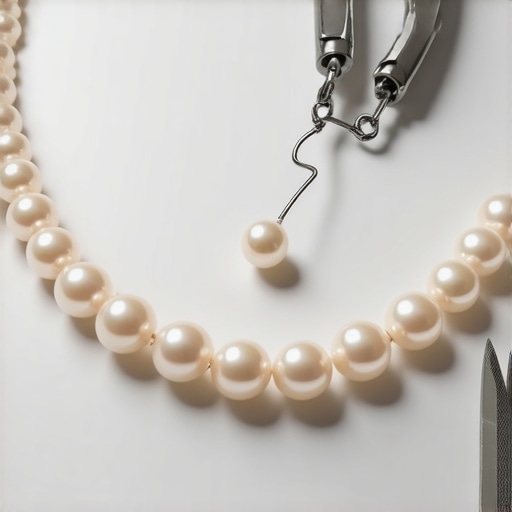
Start by choosing a clean, well-lit area free of distractions. Gather the necessary tools: a fine-tooth jeweler’s ripper or pointed scissors, a sturdy ruler or measuring tape, a bead board, and new silk or poly-polyester cord. I once attempted restringing on a cluttered kitchen table; the mess made it difficult to keep track of the tiny knots—so clean and organized workspaces are essential. Next, select a high-quality thread, preferably silk, unless you prefer the longevity and durability of nylon-based cords like polyester cords, which are gaining popularity for their resistance to rot and fraying.
Removing the Old Thread Carefully
Use the jeweler’s ripper to gently pry apart the knots holding the pearls in place. Take your time—ripping or pulling too hard risks damaging the pearls or breaking the thread. For a specific example, I once accidentally cracked a pearl while hurriedly ripping the knot; this taught me to work slowly and methodically. As you remove each knot, keep a small container nearby for the old thread remnants. Document the length of the original thread with your ruler—this ensures your new stringing matches the original length, preserving the necklace’s proportions.
Measuring and Cutting the New Thread
Measure and cut a length of new thread approximately 20% longer than the original, allowing extra for knots and adjustments. For instance, if your old thread was 20 inches, cut a new one around 24 inches. This extra length provides flexibility during tying. When handling the thread, avoid touching the silk with oils from your fingers; instead, use beading gloves or clean tweezers. Threading the cord through the needle (if used) requires patience—thread it gently to prevent fraying or bending. Remember, the quality of the thread impacts the overall trustworthiness of your restringing; consider upgrading to polymer cords for added durability.
Securing the Pearls and Creating Tight Knots
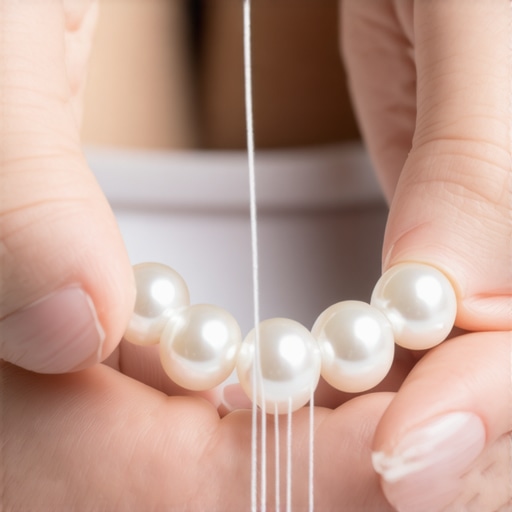
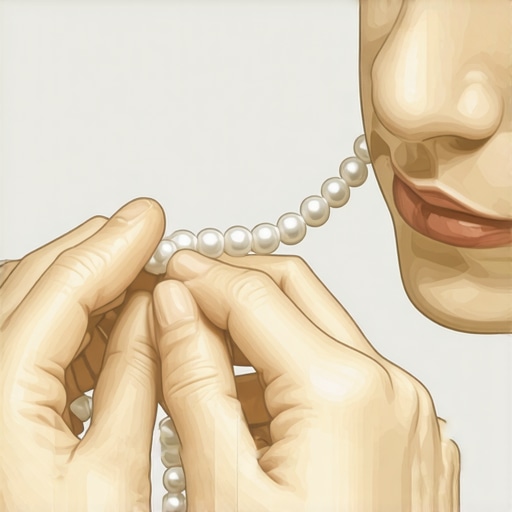
Thread the pearls onto the new cord in order, maintaining the original sequence if possible. Tie small, uniform knots between each pearl—these prevent movement and provide cushioning. To simplify, I use a magnifier and fine tweezers to create consistent knots, much like sewing tiny stitches on fabric. For extra security, consider doubling the knots in high-risk areas. Once all pearls are knotted, gently pull the thread to test the tightness. Avoid excessive tension—too tight can damage the pearls, too loose can cause slipping. This step is crucial to ensure longevity and trust, similar to how expert restringing strategies build confidence in the jewelry’s durability.
Finishing and Securing the Ends
Finish by tying secure surgeon’s knots or double knots at each end, ensuring they won’t slip over time. After knotting, trim excess thread close to each knot to prevent fraying. For a polished look, dab a tiny drop of jewelry adhesive on the knots—this prevents slippage and extends the lifespan. Once completed, pass the necklace through a clasp or additional fastener, reinforcing connections with pliers if needed. Remember, proper finishing not only enhances appearance but also reinforces trust—akin to expert repair techniques that ensure lasting confidence in your workmanship.
Final Inspection and Maintenance Tips
Inspect each knot and pearl for uniformity and security. Test the necklace’s flexibility by gently moving it—any slack or looseness signals the need for correction. Schedule regular inspections, especially if exposed to moisture or chemicals; silk can degrade even at a microscopic level. For added peace of mind, consider obtaining a professional appraisal or updating your jewelry valuation to reflect the restoration. Proper care and timely restringing are investments in your jewelry’s future—protecting your cherished pieces from damage and ensuring their beauty endures.
Many jewelry enthusiasts and even professionals cling to popular myths that can hinder proper care and restoration. As an expert in jewelry restoration, I often see misconceptions that, if unchallenged, lead to costly mistakes. One prevalent falsehood is the belief that all restringing methods are equal—many assume silk thread is always superior for pearls, but recent research and practical experience suggest otherwise. For example, polyester cords now stand out as a durable, rot-resistant alternative, especially post-2026. Relying solely on traditional silk can expose your jewelry to unnecessary degradation, so it’s vital to evaluate both material and application nuances.
Are You Falling for the Costly Mistake of Overlooking Thread Quality?
Another often-missed nuance involves the quality of thread and knots during restringing. Many assume that knot size or string length are the primary concerns, but the real game-changer is knot tension and consistency. Inconsistent knots can cause uneven wear, creating weak points that may snap unexpectedly—leading to damage or loss. Moreover, improper knotting techniques, such as skipping double knots in critical areas, raise the risk of failure. This is why, during restringing projects, attention to knot security is crucial for building lasting trust in your jewelry’s durability.
Harnessing the Power of Proper Appraisal for Your Jewelry Investment
Many owners underestimate the importance of current, accurate appraisals. An outdated appraisal can jeopardize your insurance coverage and financial confidence. Factors like market shifts in 2026 significantly affect jewelry valuation, especially with lab-grown diamond options gaining popularity. Failing to update appraisals with recent market data jeopardizes your ability to receive appropriate compensation in case of damage or loss. Remember, a trustworthy appraisal requires meticulous documentation—don’t cut corners on this crucial step.
What Risks Come with DIY Repairs and Why Going Pro Matters
While DIY repair and engraving might seem cost-effective, they often come with hidden pitfalls. Amateur attempts can inadvertently cause irreversible damage, such as micro-cracks or uneven engravings. For high-value pieces, entrusting your jewelry to a professional ensures precision and confidence. For instance, expert engraving techniques like laser-increased detail and durability are hard to replicate at home. Recognizing these nuances can save you money and preserve your jewelry’s integrity in the long run.
Have you ever fallen into this trap? Let me know in the comments and share your experience—deepening our community’s understanding goes a long way toward smarter jewelry care.
Mastering Maintenance with Precision Tools
Ensuring your jewelry remains stunning requires the right set of tools and some expert know-how. I swear by a high-quality jeweler’s microscope—it’s indispensable for detecting subtle signs of wear, like tiny cracks or fraying threads, before they become major issues. Using a lighted magnifier, such as the BelOMO 10x triplet, allows me to assess every knot or setting detail meticulously, preventing costly repairs later. Additionally, a precision polishing cloth and a small set of fine brushes help maintain the luster—these tools remove grime without scratching delicate surfaces. Remember, investing in good tools isn’t just about doing repairs; it’s about proactively monitoring your jewelry’s health.
Leveraging Advanced Techniques for Long-Term Results
Beyond basic tools, I’ve adopted some advanced methods like laser inspections, which provide non-invasive, highly detailed imaging of internal cracks or weak points—crucial for valuable heirlooms. For example, laser shearing can reveal microfractures in settings that aren’t visible to the naked eye, informing whether reinforcement or re-setting is necessary. When it comes to repairs, laser welding has revolutionized the process, offering cleaner joins without damaging adjacent areas. As the industry progresses, integrating these techniques ensures your jewelry not only survives but thrives through the years. I predict that in the next decade, digital monitoring, such as 3D scanning, will become standard for tracking wear and guiding preventative care, much like the latest advancements in laser welding technology.
How do I keep my jewelry working over time?
Maintaining the integrity of your jewelry involves regular inspections, professional cleanings, and timely repairs—think of it as routine health check-ups. Schedule annual evaluations with a trusted jeweler, who can employ tools like ultrasonic cleaners and micro-abrasives to restore brightness without risking damage. For long-term security, consider professional appraisals to document your pieces’ condition, especially when market values shift, as noted here. Don’t forget to keep records of past repairs and maintenance—these act as a provenance trail for future restorations or sales. Embracing ongoing care and investing in quality tools define the difference between jewelry that endures and pieces that fade with neglect.
Embrace the Future with Better Tools and Techniques
Looking ahead, I see a trend toward automation and smarter diagnostics, making jewelry maintenance more accessible and precise. Augmented reality apps for virtual inspections or AI-driven wear predictions could become part of standard care routines, empowering owners to catch issues early. For now, I recommend trying a professional-grade micro-engraving device to monitor stress points on high-value pieces—small but effective, this method can give you peace of mind. Incorporating these innovations into your maintenance routine helps preserve trust and value, ensuring your jewelry remains a treasured part of your life for decades to come.
The Hardest Lesson I Learned About restringing, appraisal, jewelry repair, and engraving
One personal revelation was realizing that even the smallest knots in a pearl necklace hold immense significance; a tiny slip can lead to loss of precious gems. I’ve also learned that neglecting regular appraisals can leave your valuables undervalued and unprotected—an oversight I once made that cost me dearly. Furthermore, attempting complex repairs without proper tools or skills can cause irreversible damage; entrusting experts has saved me from costly regrets. Lastly, I discovered that engraving isn’t just decoration—it’s a strategic safeguard against misidentification or theft when done with precision and care. These lessons underscore that attention to detail in jewelry care elevates trust and longevity beyond mere aesthetics.
My Essential Tools for Jewelry Mastery
To truly care for jewelry, I rely on a few trusted resources: a high-quality jeweler’s magnifier, which reveals early signs of wear; a dedicated beading mat to prevent loss of tiny components; and a durable, condition-specific thread such as polyester cords for resilient restringing. These tools empower me to perform precise repairs and evaluations, ensuring each piece maintains its history and value. Additionally, I frequently consult industry-standard books that delve into repair techniques, like those found in the comprehensive guides on jewelry restoration.
Your Moment to Shine: Take Action Now
Investing time and care into your jewelry isn’t just about aesthetics—it’s about preserving your stories and trust. By applying even a fraction of these insights today, you safeguard your treasures against time’s relentless march. Don’t wait until a loose knot or a fading engraving threatens what you hold dear; proactive maintenance and expert guidance ensure your jewelry continues to inspire confidence and admiration. Make the decision to embrace these practices now, and watch your pieces radiate renewed trust and beauty for generations to come.
What part of jewelry care do you find most challenging? Share your experiences below, and let’s build a community of confident jewelry owners together.
}**#}#}#}#}#}#}#}#}#}#}#}#}#}#}#}#}#}#}#}#}#}#}#}#}#}#}#}#}#}#}#}#}#}#}#}#}#}#}#}#}#}#}#}#}#}#}#}#}#}#}#}#}#}#}#}#}#}#}#}#}#}#}#}#}#}#}#}#}#}#}#}#}#}#}#}#}#}#}#}#}#}#}#}#}#}#}#}#}#}#}#}#}#}#}#}#}#}#}#}#}#}#}#}#}#}#}#}#}#}#}#}#}#}#}#}#}#}#}#}#}#}#}#}#}#}#}#}#}#}#}#}#}#}#}#}#}#}#}#}#}#}#}#}#}#}#}#}#}#}#}#}#}#}#}#}#}#}#}#}#}#}#}#}#}#}#}#}#}#}#}#}#}#}#}#}#}#}#}#}#}#}#}#}#}#}#}#}#}#}#}#}#}#}#}#}#}#}#}#}#}#}#}#}#}#}#}#}#}#}#}#}#}#}#}#}#}#}#}#}#}#}#}#}#}#}#}#}#}#}#}#}#}#}#}#}#}#}#}#}#}#}#}#}#}#}#}#}#}#}#}#}#}#}#}#}#}#}#}#}#}#}#}#}#}#}#}#}#}#}#}#}#}#}#}#}#}#}#}#}#}#}#}#}#}#}#}#}#}#}#}#}#}#}#}#}#}#}#}#}#}#}#}#}#}#}#}#}#}#}#}#}#}#}#}#}#}#}#}#}#}#}#}#}#}#}#}#}#}#}#}#}#}#}#}#}#}#}#}#}#}#}#}#}#}#}#}#}#}#}#}#}#}#}#}#}#}#}#}#}#}#}#}#}#}#}#}#}#}#}#}#}#}#}#}#}#}#}#}#}#}#}#}#}#}#}#}#}#}#}#}#}#}#}#}#}#}#}#}#}#}#}#}#}#}#}#}#}#}#}#}#}#}#}#}#}#}#}#}#}#}#}#}#}#}#}#}#}#}#}#}#}#}#}#}#}#}#}#}#}#}#}#}#}#}#}#}#}#}#}#}#}#}#}#}#}#}#}#}#}#}#}#}#}#}#}#}#}#}#}#}#}#}#}#}#}#}#}#}#}#}#}#}#}#}#}#}#}#}#}#}#}#}#}#}#}#}#}#}#}#}#}#}#}#}#}#}#}#}#}#}#}#}#}#}#}#}#}#}#}#}#}#}#}#}#}#}#}#}#}#}#}#}#}#}#}#}#}#}#}#}#}#}#}#}#}#}#}#}#}#}#}#}#}#}#}#}#}#}#}#}#}#}#}#}#}#}#}#}#}#}#}#}#}#}#}#}#}#}#}#}#}#}#}#}#}#}#}#}#}#}#}#}#}#}#}#}#}#}#}#}#}#}#}#}#}#}#}#}#}#}#}#}#}#}#}#}#}#}#}#}#}#}#}#}#}#}#}#}#}#}#}#}#}#}#}#}#}#}#}#}#}#}#}#}#}#}#}#}#}#}#}#}#}#}#}#}#}#}#}#}#}#}#}#}#}#}#}#}#}#}#}#}#}#}#}#}#}#}#}#}#}#}#}#}#}#}#}#}#}#}#}#}#}#}#}#}#}#}#}#}#}#}#}#}#}#}#}#}#}#}#}#}#}#}#}#}#}#}#}#}#}#}#}#}#}#}#}#}#}#}#}#}#}#}#}#}#}#}#}#}#}#}#}#}#}#}#}#}#}#}#}#}#}#}#}#}#}#}#}#}#}#}#}#}#}#}#}#}#}#}#}#}#}#}#}#}#}#}#}#}#}#}#}#}#}#}#}#}#}#}#}#}#}#}#}#}#}#}#}#}#}#}#}#}#}#}#}#}#}#}#}#}#}#}#}#}#}#}#}#}#}#}#}#}#}#}#}#}#}#}#}#}#}#}#}#}#}#}#}#}#}#}#}#}#}#}#}#}#}#}#}#}#}#}#}#}#}#}#}#}#}#}#}#}#}#}#}#}#}#}#}#}#}#}#}#}#}#}#}#}#}#}#}#}#}#}#}#}#}#}#}#}#}#}#}#}#}#}#}#}#}#}#}#}#}#}#}#}#}#}#}#}#}#}#}#}#}#}#}#}#}#}#}#}#}#}#}#}#}#}#}#}#}#}#}#}#}#}#}#}#}#}#}#}#}#}#}#}#}#}#}#}#}#}#}#}#}#}#}#}#}#}#}#}#}#}#}#}#}#}#}#}#}#}#}#}#}#}#}#}#}#}#}#}#}#}#}#}#}#}#}#}#}#}#}#}#}#}#}#}#}#}#}#}#}#}#}#}#}#}#}#}#}#}#}#}#}#}#}#}#}#}#}#}#}#}#}#}#}#}#}#}#}#}#}#}#}#}#}#}#}#}#}#}#}#}#}#}#}#}#}#}#}#}#}#}#}#}#}#}#}#}#}#}#}#}#}#}#}#}#}#}#}#}#}#}#}#}#}#}#}#}#}#}#}#}#}#}#}#}#}#}#}#}#}#}#}#}#}#}#}#}#}#}#}#}#}#}#}#}#}#}#}#}#}#}#}#}#}#}#}#}#}#}#}#}#}#}#}#}#}#}#}#}#}#}#}#}#}#}#}#}#}#}#}#}#}#}#}#}#}#}#}#}#}#}#}#}#}#}#}#}#}#}#}#}#}#}#}#}#}#}#}#}#}#}#}#}#}#}#}#}#}#}#}#}#}#}#}#}#}#}#}#}#}#}#}#}#}#}#}#}#}#}#}#}#}#}#}#}#}#}#}#}#}#}#}#}#}#}#}#}#}#}#}#}#}#}#}#}#}#}#}#}#}#}#}#}#}#}#}#}#}#}#}#}#}#}#}#}#}#}#}#}#}#}#}#}#}#}#}#}#}#}#}#}#}#}#}#}#}#}#}#}#}#}#}#}#}#}#}#}#}#}#}#}#}#}#}#}#}#}#}#}#}#}#}#}#}#}#}#}#}#}#}#}#}#}#}#}#}#}#}#}#}#}#}#}#}#}#}#}#}#}#}#}#}#}#}#}#}#}#}#}#}#}#}#}#}#}#}#}#}#}#}#}#}#}#}#}#}#}#}#}#}#}#}#}#}#}#}#}#}#}#}#}#}#}#}#}#}#}#}#}#}#}#}#}#}#}#}#}#}#}#}#}#}#}#}#}#}#}#}#}#}#}#}#}#}#}#}#}#}#}#}#}#}#}#}#}#}#}#}#}#}#}#}#}#}#}#}#}#}#}#}#}#}#}#}#}#}#}#}#}#}#}#}#}#}#}#}#}#}#}#}#}#}#}#}#}#}#}#}#}#}#}#}#}#}#}#}#}#}#}#}#}#}#}#}#}#}#}#}#}#}#}#}#}#}#}#}#}#}#}#}#}#}#}#}#}#}#}#}#}#}#}#}#}#}#}#}#}#}#}#}#}#}#}#}#}#}#}#}#}#}#}#}#}#}#}#}#}#}#}#}#}#}#}#}#}#}#}#}#}#}#}#}#}#}#}#}#}#}#}#}#}#}#}#}#}#}#}#}#}#}#}#}#}#}#}#}#}#}#}#}#}#}#}#}#}#}#}#}#}#}#}#}#}#}#}#}#}#}#}#}#}#}#}#}#}#}#}#}#}#}#}#}#}#}#}#}#}#}#}#}#}#}#}#}#}#}#}#}#}#}#}#}#}#}#}#}#}#}#}#}#}#}#}#}#}#}#}#}#}#}#}#}#}#}#}#}#}#}#}#}#}#}#}#}#}#}#}#}#}#}#}#}#}#}#}#}#}#}#}#}#}#}#}#}#}#}#}#}#}#}#}#}#}#}#}#}#}#}#}#}#}#}#}#}#}#}#}#}#}#}#}#}#}#}#}#}#}#}#}#}#}#}#}#}#}#}#}#}#}#}#}#}#}#}#}#}#}#}#}#}#}#}#}#}#}#}#}#}#}#}#}#}#}#}#}#}#}#}#}#}#}#}#}#}#}#}#}#}#}#}#}#}#}#}#}#}#}#}#}#}#}#}#}#}#}#}#}#}#}#}#}#}#}#}#}#}#}#}#}#}#}#}#}#}#}#}#}#}#}#}#}#}#}#}#}#}#}#}#}#}#}#}#}#}#}#}#}#}#}#}#}#}#}#}#}#}#}#}#}#}#}#}#}#}#}#}#}#}#}#}#}#}#}#}#}#}#}#}#}#}#}#}#}#}#}#}#}#}#}#}#}#}#}#}#}#}#}#}#}#}#}#}#}#}#}#}#}#}#}#}#}#}#}#}#}#}#}#}#}#}#}#}#}#}#}#}#}#}#}#}#}#}#}#}#}#}#}#}#}#}#}#}#}#}#}#}#}#}#}#}#}#}#}#}#}#}#}#}#}#}#}#}#}#}#}#}#}#}#}#}#}#}#}#}#}#}#}#}#}#}#}#}#}#}#}#}#}#}#}#}#}#}#}#}#}#}#}#}#}#}#}#}#}#}#}#}#}#}#}#}#}#}#}#}#}#}#}#}#}#}#}#}#}#}#}#}#}#}#}#}#}#}#}#}#}#}#}#}#}#}#}#}#}#}#}#}#}#}#}#}#}#}#}#}#}#}#}#}#}#}#}#}#}#}#}#}#}#}#}#}#}#}#}#}#}#}#}#}#}#}#}#}#}#}#}#}#}#}#}#}#}#}#}#}#}#}#}#}#}#}#}#}#}#}#}#}#}#}#}#}#}#}#}#}#}#}#}#}#}#}#}#}#}#}#}#}#}#}#}#}#}#}#}#}#}#}#}#}#}#}#}#}#}#}#}#}#}#}#}#}#}#}#}#}#}#}#}#}#}#}#}#}#}#}#}#}#}#}#}#}#}#}#}#}#}#}#}#}#}#}#}#}#}#}#}#}#}#}#}#}#}#}#}#}#}#}#}#}#}#}#}#}#}#}#}#}#}#}#}#}#}#}#}#}#}#}#}#}#}#}#}#}#}#}#}#}#}#}#}#}#}#}#}#}#}#}#}#}#}#}#}#}#}#}#}#}#}#}#}#}#}#}#}#}#}#}#}#}#}#}#}#}#}#}#}#}#}#}#}#}#}#}#}#}#}#}#}#}#}#}#}#}#}#}#}#}#}#}#}#}#}#}#}#}#}#}#}#}#}#}#}#}#}#}#}#}#}#}#}#}#}#}#}#}#}#}#}#}#}#}#}#}#}#}#}#}#}#}#}#}#}#}#}#}#}#}#}#}#}#}#}#}#}#}#}#}#}#}#}#}#}#}#}#}#}#}#}#}#}#}#}#}#}#}#}#}#}#}#}#}#}#}#}#}#}#}#}#}#}#}#}#}#}#}#}#}#}#}#}#}#}#}#}#}#}#}#}#}#}#}#}#}#}#}#}#}#}#}#}#}#}#}#}#}#}#}#}#}#}#}#}#}#}#}#}#}#}#}#}#}#}#}#}#}#}#}#}#}#}#}#}#}#}#}#}#}#}#}#}#}#}#}#}#}#}#}#}#}#}#}#}#}#}#}#}#}#}#}#}#}#}#}#}#}#}#}#}#}#}#}#}#}#}#}#}#}#}#}#}#}#}#}#}#}#}#}#}#}#}#}#}#}#}#}#}#}#}#}#}#}#}#}#}#}#}#}#}#}#}#}#}#}#}#}#}#}#}#}#}#}#}#}#}#}#}#}#}#}#}#}#}#}#}#}#}#}#}#}#}#}#}#}#}#}#}#}#}#}#}#}#}#}#}#}#}#}#}#}#}#}#}#}#}#}#}#}#}#}#}#}#}#}#}#}#}#}#}#}#}#}#}#}#}#}#}#}#}#}#}#}#}#}#}#}#}#}#}#}#}#}#}#}#}#}#}#}#}#}#}#}#}#}#}#}#}#}#}#}#}#}#}#}#}#}#}#}#}#}#}#}#}#}#}#}#}#}#}#}#}#}#}#}#}#}#}#}#}#}#}#}#}#}#}#}#}#}#}#}#}#}#}#}#}#}#}#}#}#}#}#}#}#}#}#}#}#}#}#}#}#}#}#}#}#}#}#}#}#}#}#}#}#}#}#}#}#}#}#}#}#}#}#}#}#}#}#}#}#}#}#}#}#}#}#}#}#}#}#}#}#}#}#}#}#}#}#}#}#}#}#}#}#}#}#}#}#}#}#}#}#}#}#}#}#}#}#}#}#}#}#}#}#}#}#}#}#}#}#}#}#}#}#}#}#}#}#}#}#}#}#}#}#}#}#}#}#}#}#}#}#}#}#}#}#}#}#}#}#}#}#}#}#}#}#}#}#}#}#}#}#}#}#}#}#}#}#}#}#}#}#}#}#}#}#}#}#}#}#}#}#}#}#}#}#}#}#}#}#}#}#}#}#}#}#}#}#}#}#}#}#}#}#}#}#}#}#}#}#}#}#}#}#}#}#}#}#}#}#}#}#}#}#}#}#}#}#}#}#}#}#}#}#}#}#}#}#}#}#}#}#}#}#}#}#}#}#}#}#}#}#}#}#}#}#}#}#}#}#}#}#}#}#}#}#}#}#}#}#}#}#}#}#}#}#}#}#}#}#}#}#}#}#}#}#}#}#}#}#}#}#}#}#}#}#}#}#}#}#}#}#}#}#}#}#}#}#}#}#}#}#}#}#}#}#}#}#}#}#}#}#}#}#}#}#}#}#}#}#}#}#}#}#}#}#}#}#}#}#}#}#}#}#}#}#}#}#}#}#}#}#}#}#}#}#}#}#}#}#}#}#}#}#}#}#}#}#}#}#}#}#}#}#}#}#}#}#}#}#}#}#}#}#}#}#}#}#}#}#}#}#}#}#}#}#}#}#}#}#}#}#}#}#}#}#}#}#}#}#}#}#}#}#}#}#}#}#}#}#}#}#}#}#}#}#}#}#}#}#}#}#}#}#}#}#}#}#}#}#}#}#}#}#}#}#}#}#}#}#}#}#}#}#}#}#}#}#}#}#}#}#}#}#}#}#}#}#}#}#}#}#}#}#}#}#}#}#}#}#}#}#}#}#}#}#}#}#}#}#}#}#}#}#}#}#}#}#}#}#}#}#}#}#}#}#}#}#}#}#}#}#}#}#}#}#}#}#}#}#}#}#}#}#}#}#}#}#}#}#}#}#}#}#}#}#}#}#}#}#}#}#}#}#}#}#}#}#}#}#}#}#}#}#}#}#}#}#}#}#}#}#}#}#}#}#}#}#}#}#}#}#}#}#}#}#}#}#}#}#}#}#}#}#}#}#}#}#}#}#}#}#}#}#}#}#}#}#}#}#}#}#}#}#}#}#}#}#}#}#}#}#}#}#}#}#}#}#}#}#}#}#}#}#}#}#}#}#}#}#}#}#}#}#}#}#}#}#}#}#}#}#}#}#}#}#}#}#}#}#}#}#}#}#}#}#}#}#}#}#}#}#}#}#}#}#}#}#}#}#}#}#}#}#}#}#}#}#}#}#}#}#}#}#}#}#}#}#}#}#}#}#}#}#}#}#}#}#}#}#}#}#}#}#}#}#}#}#}#}#}#}#}#}#}#}#}#}#}#}#}#}#}#}#}#}#}#}#}#}#}#}#}#}#}#}#}#}#}#}#}#}#}#}#}#}#}#}#}#}#}#}#}#}#}#}#}#}#}#}#}#}#}#}#}#}#}#}#}#}#}#}#}#}#}#}#}#}#}#}#}#}#}#}#}#}#}#}#}#}#}#}#}#}#}#}#}#}#}#}#}#}#}#}#}#}#}#}#}#}#}#}#}#}#}#}#}#}#}#}#}#}#}#}#}#}#}#}#}#}#}#}#}#}#}#}#}#}#}#}#}#}#}#}#}#}#}#}#}#}#}#}#}#}#}#}#}#}#}#}#}#}#}#}#}#}#}#}#}#}#}#}#}#}#}#}#}#}#}#}#}#}#}#}#}#}#}#}#}#}#}#}#}#}#}#}#}#}#}#}#}#}#}#}#}#}#}#}#}#}#}#}#}#}#}#}#}#}#}#}#}#}#}#}#}#}#}#}#}#}#}#}#}#}#}#}#}#}#}#}#}#}#}#}#}#}#}#}#}#}#}#}#}#}#}#}#}#}#}#}#}#}#}#}#}#}#}#}#}#}#}#}#}#}#}#}#}#}#}#}#}#}#}#}#}#}#}#}#}#}#}#}#}#}#}#}#}#}#}#}#}#}#}#}#}#}#}#}#}#}#}#}#}#}#}#}#}#}#}#}#}#}#}#}#}#}#}#}#}#}#}#}#}#}#}#}#}#}#}#}#}#}#}#}#}#}#…
![Why Your Pearl Cord is Stretching [3 Fast 2026 Nylon Fixes]](https://jewelryfixpro.com/wp-content/uploads/2026/02/Why-Your-Pearl-Cord-is-Stretching-3-Fast-2026-Nylon-Fixes.jpeg)